


Keyboard enthusiasm is a niche yet thriving community dedicated to the appreciation and customization of mechanical keyboards. At its core, being a keyboard enthusiast encompasses a deep-seated passion for optimizing typing experiences, exploring the unique properties of various switches, and delving into the intricacies of keyboard design. Enthusiasts indulge in a realm where functionality meets personalized aesthetics, fostering a culture that celebrates individual expression through hardware.
The culture surrounding mechanical keyboards has experienced significant growth over the past decade, as more individuals discover the tactile satisfaction and auditory feedback that these keyboards provide. Online forums, social media platforms, and dedicated websites have emerged, creating spaces for enthusiasts to share their experiences, insights, and designs. This community is not only about typing but also about building connections with others who share a similar passion. Moreover, the inclination towards DIY (do-it-yourself) projects is evident as many enthusiasts choose to construct their own keyboards, thus amplifying their investment in this hobby.
A significant aspect of mechanical keyboard culture is switch lubrication, a process that many enthusiasts engage in to enhance the performance of their keyboards. Lubing switches can lead to a smoother keystroke and can even reduce noise—making the typing experience both more enjoyable and efficient. This practice underscores a fundamental tenet of keyboard enthusiasm: the belief that personalization and optimization are key to achieving the perfect typing experience. The juxtaposition of technical knowledge and creative expression within this community highlights how devoted individuals are about their hardware. As enthusiasts continue to explore the myriad ways to customize their keyboards, the act of lubing switches has become a hallmark of dedication and craftsmanship in the journey to elevate keyboard performance.
Understanding Mechanical Switches
Mechanical switches are a pivotal component in the design of many modern keyboards, and they come in various types, each offering distinct characteristics and user experiences. The primary classifications of mechanical switches include linear, tactile, and clicky switches. Understanding the nuances of these types assists enthusiasts in making informed decisions when it comes to customizing their keyboards, including the lube they may apply to enhance performance.
Linear switches are known for their smooth keystrokes without tactile feedback or audible clicks. This type of switch provides a consistent feel from top to bottom, making them popular among gamers and typists who favor rapid key presses without interruptions. The lack of tactile bump allows users to type quickly and efficiently, as the actuation is purely dependent on distance traveled. Models such as Cherry MX Red and Black are prime examples of linear switches.
Tactile switches, on the other hand, feature a noticeable bump that signals the actuation point, providing feedback to the user. This characteristic allows for a more deliberate typing experience, where individuals can feel when a key has been successfully pressed without needing to bottom out. Common tactile switches include the Cherry MX Brown, which strikes a balance between casual typing and gaming, offering both speed and comfort.
Lastly, clicky switches offer both tactile feedback and an audible click sound upon actuation, making them favored by many typists who enjoy a satisfying auditory response. These switches are ideal for users who require clear confirmation of their keystrokes, such as typists and writers. Popular examples of clicky switches include the Cherry MX Blue, which is often recommended for those who appreciate a more traditional typewriting feel.
In essence, each type of mechanical switch is tailored towards specific preferences and usage scenarios, allowing keyboard enthusiasts to customize their setups according to their needs. With options ranging from silent and smooth to tactile and clicky, understanding these switches is crucial for anyone interested in maximizing their typing experience.
The Benefits of Lubing Switches
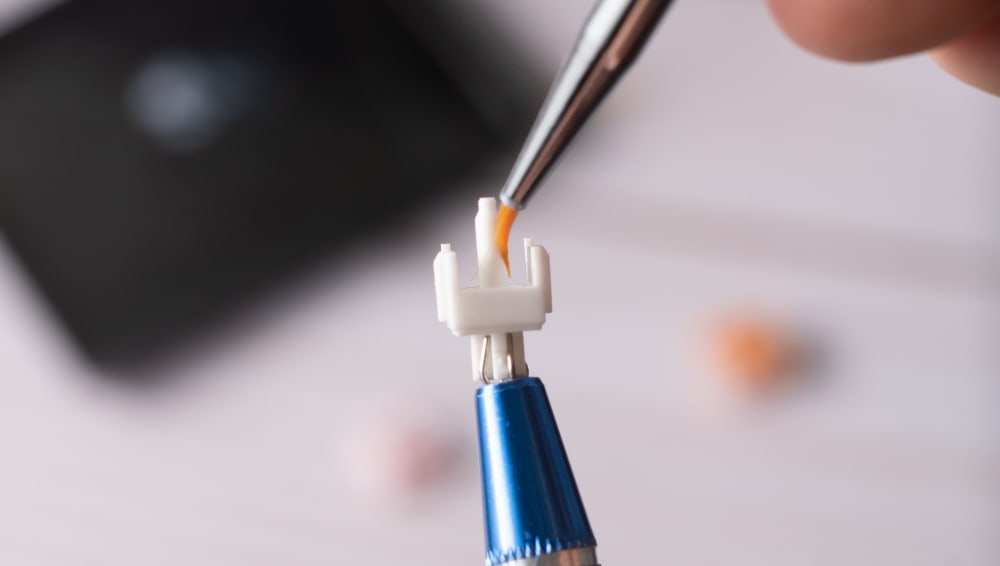
Lubing mechanical keyboard switches is a practice widely embraced by keyboard enthusiasts, and for good reason. The process of applying lubricant can significantly enhance the overall performance of the keyboard, leading to several tangible benefits. One of the most noticeable improvements is the smoothness of key presses. When lubed, mechanical switches glide more freely, allowing for a seamless typing experience. Users often report that their fingers feel less fatigued after extended use due to the consistent, fluid motion provided by lubed switches.
In addition to enhanced smoothness, lubing switches effectively reduces scratchiness, which is a common complaint among users of some switch types. Scratchiness can detract from the typing experience, making it feel less satisfying. Lubrication mitigates this issue, providing a more refined tactile feedback with each keystroke. This aspect is particularly important for those who prioritize a pleasant typing feel, as it can make the difference between an enjoyable experience and a frustrating one.
Noise dampening is another crucial advantage of switching lubrication. Especially with clicky switches, the sound produced during typing can be quite loud and jarring. Applying lubricant helps to muffle the sound produced when the key is pressed or released, resulting in a quieter typing experience. This makes lubed keyboards particularly appealing in shared workspaces or during late-night writing sessions where noise levels need to be kept to a minimum.
Finally, lubing switches can potentially increase their lifespan. The lubricant minimizes wear and tear, protecting the internal mechanisms of the switches. Although not all lubes are designed for this purpose, effective lubrication can lead to a longer lifespan for the switches, ensuring that they perform optimally over time. This investment in switch maintenance not only enhances performance but can also lead to cost savings in the long run.
The Science Behind Lubrication
The process of lubricating mechanical keyboard switches is grounded in various scientific principles. At the heart of this lubrication process are the types of lubricants used, which can significantly affect the performance, sound, and feel of the switches. The primary types of lubricants fall into two categories: oils and greases. Oil-based lubricants tend to offer low viscosity, which enables a smoother operation with less friction. On the other hand, grease is thicker, providing a more substantial layer that can dampen noise and enhance the tactile experience.
In terms of composition, many lubricants for switches are silicone-based, although specialty formulations can also include substances like PTFE (Polytetrafluoroethylene) for additional slickness. The molecular structure of these lubricants plays a crucial role in their effectiveness; for instance, silicone molecules create a slippery film that reduces metal-to-metal contact, thereby decreasing wear and tear on the switch components over time.
Viscosity is another critical factor in the efficiency of lubricants. A lubricant with too low of viscosity may evaporate or not provide adequate shielding between moving parts, while a high-viscosity lubricant can create a sluggish feel, overwhelming the lightness desired in certain mechanical switches. Therefore, enthusiasts often gravitate toward lubricants that strike a balance, offering enough thickness to cushion the parts without sacrificing responsiveness.
Moreover, the interaction between the lubricants and switch components—such as sliders and springs—can alter the acoustic properties of keystrokes. With proper lubrication, enthusiasts experience a satisfying tactile feedback along with reduced noise levels, thus enhancing the overall performance of the mechanical switch. This integration of science and user experience is what motivates many keyboard enthusiasts to explore various lubricants for their mechanical switches.
How to Lube Your Switches: Tools and Techniques
Lubing mechanical keyboard switches is a crucial step for enthusiasts seeking to enhance the performance and feel of their keyboards. The right tools and techniques can make a significant difference in the quality of the final result. To begin with, you will need some essential tools for the job. A small screwdriver is necessary to disassemble your keyboard; a precision screwdriver set is often ideal for reaching tiny screws that hold the switch housing together. Once inside, a pair of tweezers can assist in handling the small parts during the lubing process.
Next, a good quality mechanical keyboard lube is paramount. Common options include dielectric greases, such as Tribosys 3203 or Krytox, which are popular among enthusiasts for their durability and performance. It’s advisable to avoid heavy lubes, as they may create unwanted resistance during actuation. Additionally, you’ll need a small brush to apply the lube evenly; a fine-tipped artist’s brush is often preferred for precision application.
Before applying any lube, make sure to clean the switch components thoroughly. This includes removing dust and debris, which can interfere with the lube’s effectiveness. Once cleaned, it’s time to start lubing. Dip your brush lightly into the lube and apply a thin layer to the spring, stem, and housing of the switch. Ensuring that the application is even is essential, as too much lube can lead to a sluggish key press. Beginners often apply too much; less is more when it comes to lubing. After lubing, reassemble the switch and test it thoroughly before putting everything back together.
Lastly, it’s crucial to take your time during this process. Rushing can result in uneven lubrication and may lead to common mistakes, such as getting lube outside of the intended areas. Patience is key to achieving a smoother typing experience.
Choosing the Right Lube for Your Switches
When it comes to enhancing the performance of mechanical switches, lubricant selection plays a crucial role. There are various types of lubricants available, primarily categorized as greases and oils, each offering unique properties that can significantly affect the feel and sound of a keystroke.
Grease is often favored for its thicker consistency, providing a substantial dampening effect. It can effectively reduce friction between the switch components, leading to a smoother keypress. For switches that tend to be scratchy or noisy, a lubricant with a higher viscosity such as dielectric grease may be the preferred choice. It is ideal for linear switches where minimal tactile feedback is desired. For instance, users of Cherry MX Blacks, which are linear switches, may find that a heavier grease results in an optimal keystroke experience.
On the other hand, oils offer a lighter alternative, often suited for switches that require less viscosity. Light oils can maintain the delicate operation of tactile switches while still providing lubrication. They prevent binding during rapid keypresses, making them appropriate for more responsive builds. Many gamers, for instance, prefer lightweight oils for their speed-focused switches, such as Cherry MX Browns, which benefit from minimal resistance during fast-paced gameplay.
It is essential to consider the specific switch type when selecting a lubricant. While thicker greases can be beneficial for linear switches, they may hinder performance in tactile and clicky switches, where feedback is an integral part of the design. Thus, testing various lubricants on different switch types can help enthusiasts discover which combination yields the most satisfying results. Ultimately, the right lubricant enhances not just the keypress feel, but also the keyboard’s overall longevity and performance.
Lube Application: Step-by-Step Guide
Applying lubricant to keyboard switches enhances their performance and overall experience. This guide will help you disassemble your keyboard, remove the switches, and effectively apply lube, while also considering important safety precautions.
Begin by preparing your workspace. Ensure you have a clean and well-lit area to work in, preferably with an anti-static mat to prevent damage to sensitive electronic components. Gather the necessary tools, including a keycap puller, tweezers, and a soft brush for cleaning. You should also have your lubricant of choice ready; options include grease or oil specifically designed for keyboard switches.
The first step in the disassembly process is to remove the keycaps. Carefully use the keycap puller to lift the keycaps off the switches, ensuring not to apply excessive force that might damage them. Place the keycaps in a safe container to avoid misplacing them.
Next, unscrew the keyboard case if necessary and gently pry it open, making sure to disconnect any cables safely. Once the case is open, locate the switches on the PCB (printed circuit board). Using tweezers or a small flat tool, carefully pull out each switch, taking note of their orientation for reinstallation later.
With the switches removed, clean them using a soft brush to remove dust and debris. Then, apply a small amount of lubricant to the moving parts of the switch. Apply lubricant sparingly to avoid excess residue that could affect performance. It is advisable to use a brush or a toothpick to spread the lube evenly, especially on the contact points.
Once lubrication is complete, reassemble your switches back onto the PCB, ensuring they are placed in the same orientation as before. Finally, reassemble the keyboard case and replace the keycaps. Ensure everything is securely in place before testing your newly lubed keyboard.
Personalization and Customization

In the realm of keyboard enthusiasts, the passion for personalization and customization is a defining characteristic. Lubing switches is a key aspect of this process, allowing users to fine-tune the acoustics and feel of their mechanical keyboards. As each user has unique preferences regarding tactile feedback, sound profile, and overall typing experience, lubing switches has become a fundamental task for enthusiasts aiming to create a more tailored setup.
The impact of lube on switch performance is multifaceted. Different types of lubricants, ranging from greases to oils, can affect the typing experience in varied ways. For instance, some users prefer a thicker lubricant to achieve a smoother feel, while others might opt for lighter options that enhance responsiveness. The choice often reflects personal preferences regarding how their keyboard should sound and perform, demonstrating that lubing isn’t just a mechanical adjustment; it is also an expression of individual style.
Moreover, customizing the lube can yield different auditory results, shaping the sound signature produced by each keystroke. For example, a well-lubed switch may produce a softer, muted sound compared to a dry switch, which can attract noise when pressed. This auditory characteristic is particularly significant for users who seek a more subdued typing environment or prefer to minimize disruptive sounds in shared spaces. Thus, the decision to lube switches is not merely about practicality; it is intertwined with a user’s broader quest for ergonomic enjoyment and aesthetic satisfaction.
In addition, the practice of lubing switches often fosters a sense of community among keyboard enthusiasts. Sharing lube preferences, techniques, and results on forums and social media reflects the collaborative spirit inherent to this niche culture. By engaging in such discussions, users not only learn about the benefits of switch lubrication but also contribute to the collective knowledge that drives continual innovation and customization within the hobby.
Conclusion and Final Thoughts
In the realm of custom keyboards, the practice of lubing switches has emerged as a critical component for achieving optimal performance and satisfying user experience. As highlighted throughout this blog post, applying lubricant to keyboard switches plays a vital role in enhancing their tactile feel, reducing friction, and minimizing unwanted noise. For keyboard enthusiasts, these modifications not only contribute to improved functionality but also enrich the overall enjoyment of typing.
Lubricants can significantly affect the feel of switches, transforming the typing experience. By choosing the appropriate type of lube, whether it be thick or thin, users can fine-tune satisfaction according to personal preferences. Furthermore, the consistency of application is paramount, promoting reduced activation force and increasing the life span of switches. Engaging in this process not only personalizes the keyboard but also reflects a deeper commitment to one’s typing journey.
As we conclude, it is essential to recognize that lubing switches is not merely a task; it is a ceremony for many keyboard aficionados, allowing them to connect with their devices on an intrinsic level. This practice serves as an invitation to explore the profound relationship between users and their keyboards, making every keystroke a testament to that bond. We encourage our readers to share their own experiences with lubing switches and provide tips that may further enhance others’ keyboards. Together, let’s foster a community that thrives on experimentation and the quest for the perfect typing feel.